
Plateau State
“Home of Peace and Tourism”
- Capital
- Jos
- Created
- 1976 3 Feb
- Population
- 4.7M 2022 est.
- Land area
- 30,913 km²
- Density
- 153 people / km²
- LGAs
- 17 local governments
- IGR
- ₦45.1bn 2025
Overview
Plateau State is in the North-Central geopolitical zone of Nigeria, with its capital at Jos. It was created on 3 February 1976 from Benue-Plateau State, under the Murtala Mohammed administration. It has an estimated population of 4,717,300 (2022) across 30,913 km², administered through 17 local government areas.
Major towns
- Jos
- Bukuru
- Pankshin
- Shendam
- Langtang
- Mangu
- Barkin Ladi
- Bokkos
- Wase
- Riyom
- Dengi
- Amper
Leadership

His Excellency Caleb Manasseh Mutfwang
APC In office since 29 May 2023 · 1st term
View profileDeputy Governor
Josephine Piyo
History
The Jos Plateau has a long record of human settlement; terracotta sculptures of the Nok culture were first recovered during tin mining in the region. In the pre-colonial period the plateau and its escarpments were home to many autonomous peoples, including the Berom, Ngas, Mwaghavul, Tarok and Goemai, while Wase and Kanam came under emirate rule.
British tin mining began in the early 1900s and Jos grew rapidly as a mining and railway town. Plateau Province, comprising Jos and Pankshin divisions, was carved out of Bauchi Province in 1926. In 1967 Benue and Plateau provinces were merged into Benue-Plateau State.
Plateau State was created on 3 February 1976 by the Murtala Mohammed government, and in 1996 its western part was excised to create Nasarawa State. Its temperate highland climate made Jos a favoured destination, though the state has experienced recurrent communal and farmer-herder violence since 2001.
People & Culture
Ethnic groups
- Berom
- Afizere (Izere)
- Anaguta
- Ngas
- Mwaghavul
- Tarok
- Goemai
- Mupun
- Montol
- Ron
- Jukun
- Hausa
- Fulani
Languages
- Hausa
- Berom
- Ngas
- Mwaghavul
- Tarok
- Goemai
- Izere
- Mupun
- Jukun
- Montol
- English
Traditional institutions
- Gbong Gwom Jos (chairman, Plateau State Council of Chiefs)
- Ngolong Ngas
- Mishkaham Mwaghavul
- Long Goemai
- Ponzhi Tarok
- Emir of Wase
- Emir of Kanam
Economy & Natural Resources
Plateau's economy rests on agriculture and solid minerals. The temperate highland climate supports Irish potato (for which the state is Nigeria's leading producer), vegetables, maize, acha (fonio), sorghum and fruit, alongside cattle rearing and dairy production.
Tin and columbite mining shaped the state's 20th-century development and artisanal mining of tin, tantalite and other minerals continues. Jos is a regional commercial, educational and health-care centre, and the state's scenery, museums and wildlife parks underpin its tourism sector.
Key sectors
- Agriculture and horticulture
- Solid minerals
- Tourism and hospitality
- Education and health services
- Dairy and livestock
Agricultural produce
- Irish potato
- Maize
- Acha (fonio)
- Sorghum
- Millet
- Rice
- Yam
- Cabbage, carrots and other vegetables
- Strawberries
- Livestock and dairy
Solid minerals
- Tin (cassiterite)
- Columbite
- Tantalite
- Barite
- Bauxite
- Bentonite
- Kaolin
- Granite
- Coal
- Iron ore
- Lead-zinc
- Molybdenite
- Pyrochlore
- Wolfram
- Salt
Gemstones
- Emerald
Raw materials
- Irish potatoes
- Vegetables
- Cassiterite (tin ore)
- Columbite
- Kaolin
- Milk
Internally generated revenue: ₦45.1bn (2025) · Source: NBS, Internally Generated Revenue at State Level 2025 (figures as reported by Blueprint, 24 Sep 2026; rounded to N0.01bn)
Investment Opportunities
Horticulture and agro-processing
Potato, vegetable and fruit processing, cold storage and packaging serving national markets.
Solid minerals
Tin, columbite, tantalite and kaolin beneficiation, and rehabilitation of former mining land.
Tourism and hospitality
Highland resorts, eco-tourism and heritage tourism built on the state's climate, rock formations, waterfalls and museums.
Dairy
Dairy processing and ranching suited to the plateau's cool grasslands.
Agro-logistics
State agro-logistics hubs at Mangu and Shendam aim to link farm clusters to markets.
Interested in Plateau?
Submit your proposal and the Secretariat will connect you with the state's investment agency.
Tourism & Heritage
Shere Hills
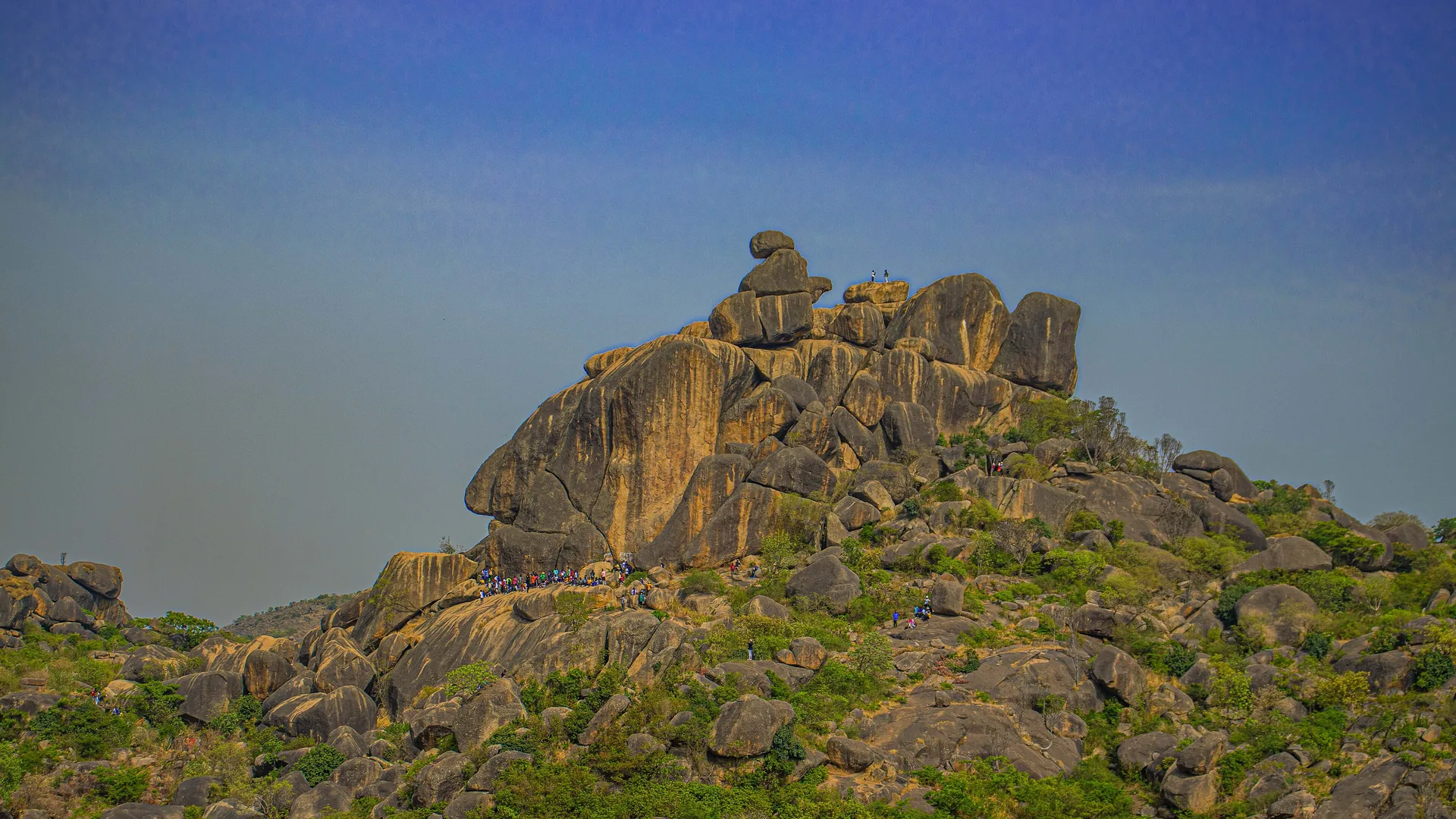
A range east of Jos that includes some of the plateau's highest peaks, popular with hikers and climbers.
Kurra Falls
Waterfalls south-east of Jos, site of the state's first hydroelectric station.
Riyom Rock
A striking balancing-rock formation about 25 km south-west of Jos.
National Museum, Jos
Founded in 1952, known for Nok terracottas, and adjoining the Museum of Traditional Nigerian Architecture.
Assop Falls
A waterfall on the edge of the plateau along the Jos-Abuja road.
Wase Rock
A dome-shaped inselberg near Wase that is a breeding site for white pelicans.
Gallery
Local Government Areas
17 local government areas
- Barkin Ladi
- Bassa
- Bokkos
- Jos East
- Jos North
- Jos South
- Kanam
- Kanke
- Langtang North
- Langtang South
- Mangu
- Mikang
- Pankshin
- Qua'an Pan
- Riyom
- Shendam
- Wase