
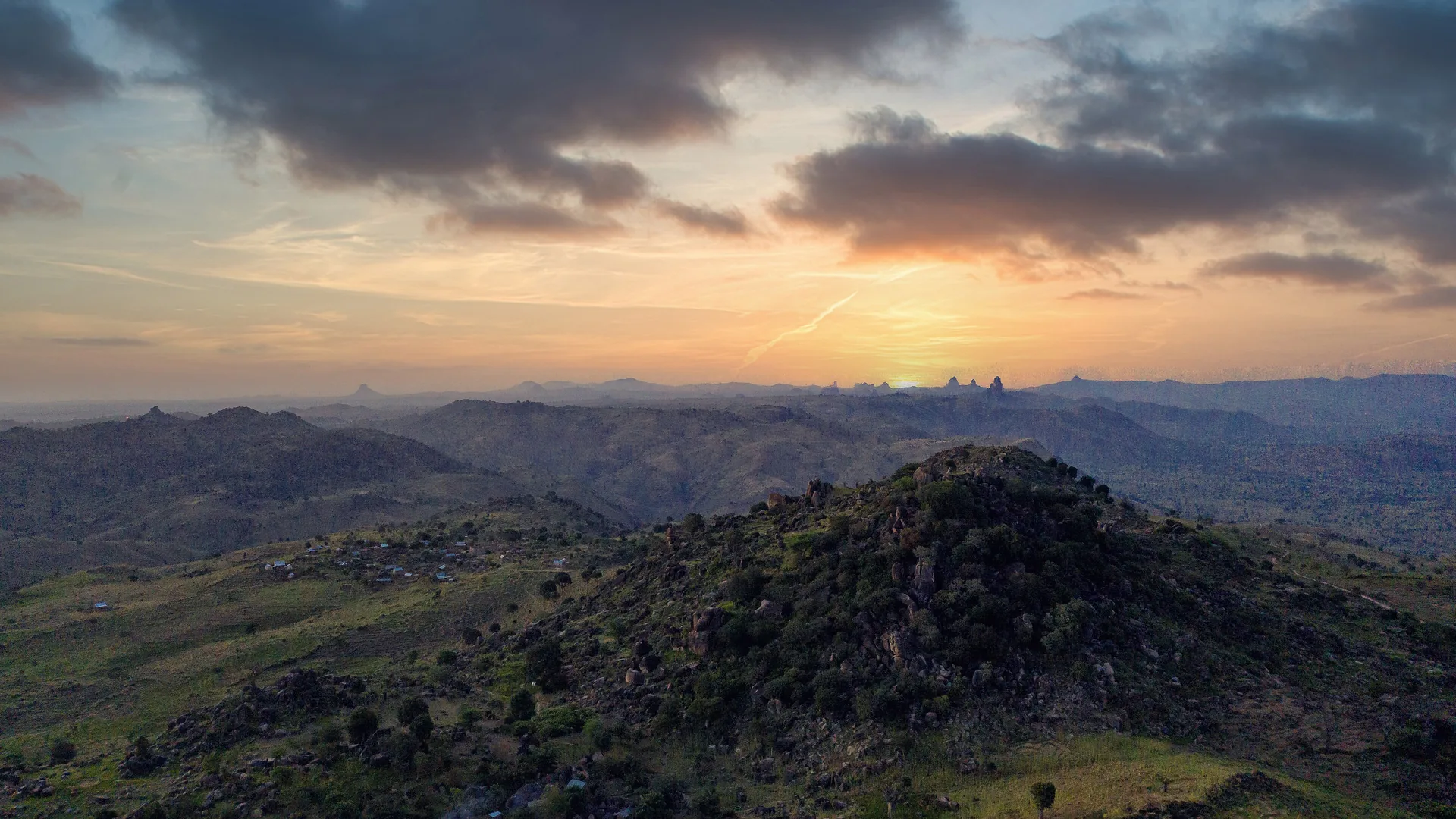
Adamawa State
“Land of Beauty”
- Capital
- Yola
- Created
- 1991 27 Aug
- Population
- 4.9M 2022 est.
- Land area
- 36,917 km²
- Density
- 133 people / km²
- LGAs
- 21 local governments
- IGR
- ₦17.1bn 2023
Overview
Adamawa State is in the North-East geopolitical zone of Nigeria, with its capital at Yola. It was created on 27 August 1991 from Gongola State (split into Adamawa and Taraba). It has an estimated population of 4,902,100 (2022) across 36,917 km², administered through 21 local government areas.
Major towns
- Yola
- Jimeta
- Mubi
- Numan
- Ganye
- Michika
- Gombi
- Mayo-Belwa
- Hong
Leadership

His Excellency Ahmadu Umaru Fintiri
APC In office since 29 May 2019 · 2nd term
View profileDeputy Governor
Kaletapwa George Farauta
History
The territory of present-day Adamawa takes its name from Modibbo Adama, a Fulani scholar who in 1806 received a flag from Usman dan Fodio to lead the jihad in the upper Benue region. Adama founded the Adamawa (Fombina) Emirate, a vassal of the Sokoto Caliphate that extended deep into what is now northern Cameroon, and established Yola as its capital in 1841; he died there in 1848. The emirate's rulers carry the title Lamido, and the line of succession continues to the present day.
At the end of the nineteenth century the emirate was partitioned between the British and the Germans. The western portion became part of the Northern Nigeria Protectorate, while the east formed part of German Kamerun. After the First World War the German sector became part of the British-administered Northern Cameroons, which voted in the 1961 plebiscite to join Nigeria. After independence the area was part of the Northern Region, then the North-Eastern State (1967) and Gongola State (1976).
Adamawa State was created on 27 August 1991 when Gongola State was divided into Adamawa and Taraba. It is one of Nigeria's most ethnically diverse states, with over 100 indigenous groups, and is home to the Sukur Cultural Landscape, Nigeria's first UNESCO World Heritage Site. Northern LGAs such as Mubi, Madagali and Michika were heavily affected by the Boko Haram insurgency between 2012 and 2018, and recovery and resettlement have been a major focus of policy since.
People & Culture
Ethnic groups
- Fulani
- Bachama (Bwatiye)
- Kamwe
- Marghi
- Kilba
- Mbula
- Verre
- Bata
- Lunguda
- Mumuye
- Chamba
Languages
- Fulfulde
- Hausa
- English
- Bachama (Bwatiye)
- Kamwe
- Marghi
- Kilba (Huba)
- Mbula
- Verre
Traditional institutions
- Adamawa Emirate (Lamido Fombina, Yola)
- Mubi Emirate
- Bachama Kingdom (Hama Bachama, Numan)
Economy & Natural Resources
Adamawa's economy is predominantly agricultural. Major crops include maize, rice, sorghum, millet, groundnut, cotton, beans and cassava, with dry-season vegetable farming along the Benue, Gongola and Yedseram river valleys. Livestock is a major industry: the state has large cattle herds and grazing reserves, and the Mubi cattle market draws traders from across Nigeria and neighbouring countries. The Dangote Group operates a sugar estate and refinery at Numan.
The state's mineral endowment includes kaolin, bentonite, gypsum, magnesite and limestone. Like most Nigerian states it depends heavily on federal allocations; NBS data put its internally generated revenue at about N17.1 billion in 2023.
Key sectors
- Agriculture
- Livestock
- Sugar production
- Commerce
- Tourism
- Solid minerals
Agricultural produce
- Maize
- Rice
- Sorghum
- Millet
- Groundnut
- Cotton
- Beans
- Cassava
- Sugarcane
- Cattle
Solid minerals
- Kaolin
- Bentonite
- Gypsum
- Magnesite
- Limestone
Raw materials
- Sugarcane
- Cotton
- Hides and skins
- Groundnut
- Kaolin
Internally generated revenue: ₦17.1bn (2023) · Source: NBS, Internally Generated Revenue at State Level 2023 (https://nigerianstat.gov.ng/download/1241579)
Investment Opportunities
Livestock value chain
Large cattle population and established markets such as Mubi create scope for abattoirs, meat processing, dairy and leather.
Agro-processing
Irrigable river valleys and the Numan sugar estate support rice milling, sugar and cotton processing.
Tourism
The Sukur World Heritage Site, the Mandara Mountains and the Lamido's palace in Yola offer heritage and eco-tourism potential.
Solid minerals
Deposits of kaolin, bentonite, gypsum and limestone can supply ceramics, drilling-mud and cement industries.
Interested in Adamawa?
Submit your proposal and the Secretariat will connect you with the state's investment agency.
Tourism & Heritage
Sukur Cultural Landscape
UNESCO World Heritage Site (1999) in Madagali LGA with stone terraces, a hilltop chief's palace and ancient iron-smelting heritage.
Lamido's Palace, Yola
Seat of the Adamawa Emirate, founded by Modibbo Adama in the nineteenth century.
Mandara Mountains
Rugged range along the Cameroon border in the north of the state.
Kiri Dam
Reservoir on the Gongola River at Shelleng that supplies irrigation for the Numan sugar estate.
Benue–Gongola confluence, Numan
Meeting point of the Benue and Gongola rivers near Numan.
Gallery
Local Government Areas
21 local government areas
- Demsa
- Fufore
- Ganye
- Girei
- Gombi
- Guyuk
- Hong
- Jada
- Lamurde
- Madagali
- Maiha
- Mayo-Belwa
- Michika
- Mubi North
- Mubi South
- Numan
- Shelleng
- Song
- Toungo
- Yola North
- Yola South