
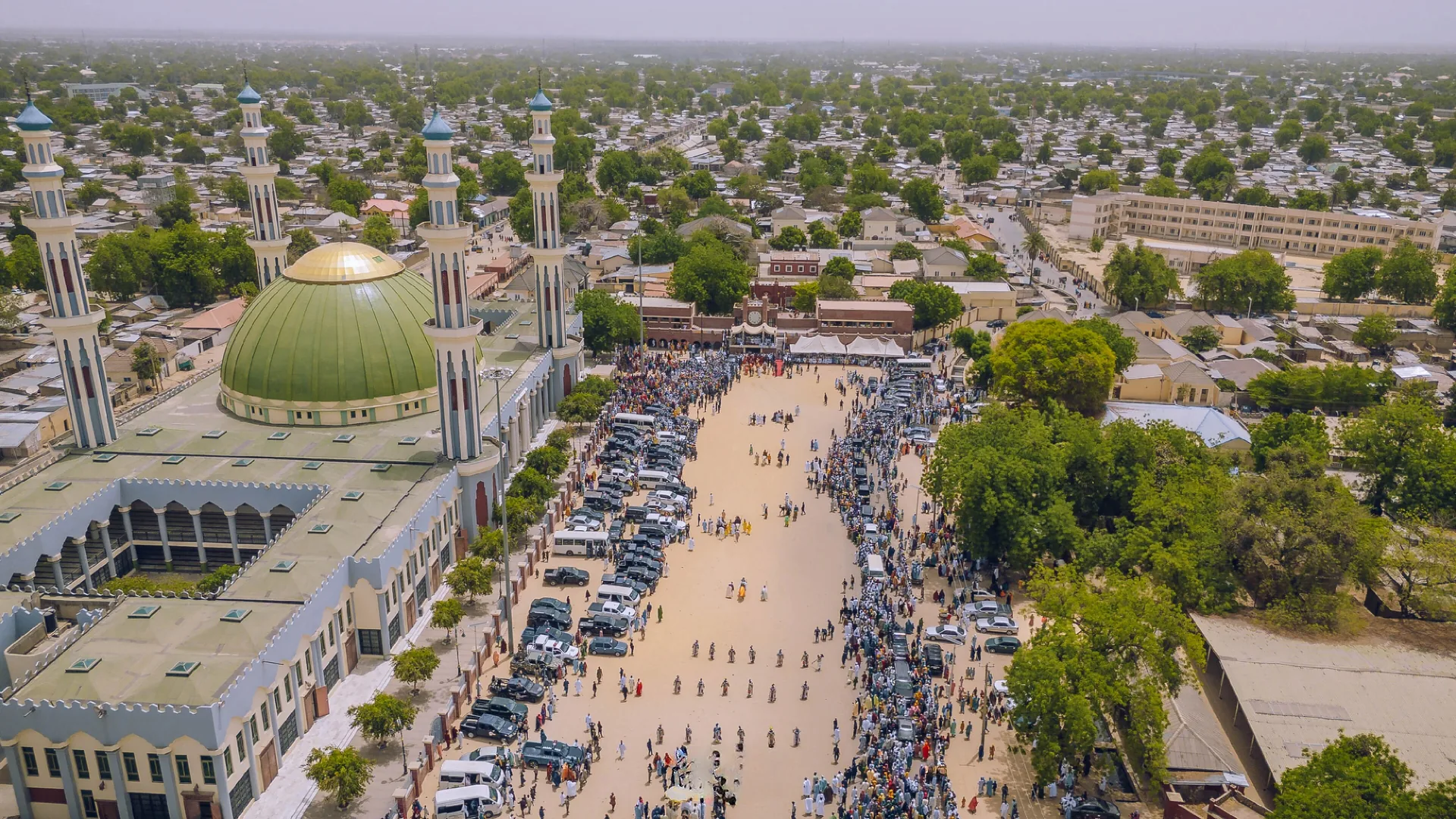
- Capital
- Maiduguri
- Created
- 1976 3 Feb
- Population
- 6.1M 2022 est.
- Land area
- 70,898 km²
- Density
- 86 people / km²
- LGAs
- 27 local governments
- IGR
- ₦19.5bn 2023
Overview
Borno State is in the North-East geopolitical zone of Nigeria, with its capital at Maiduguri. It was created on 3 February 1976 from North-Eastern State. It has an estimated population of 6,111,500 (2022) across 70,898 km², administered through 27 local government areas.
Major towns
- Maiduguri
- Biu
- Bama
- Monguno
- Dikwa
- Gwoza
- Konduga
- Damboa
- Ngala
- Baga
Leadership
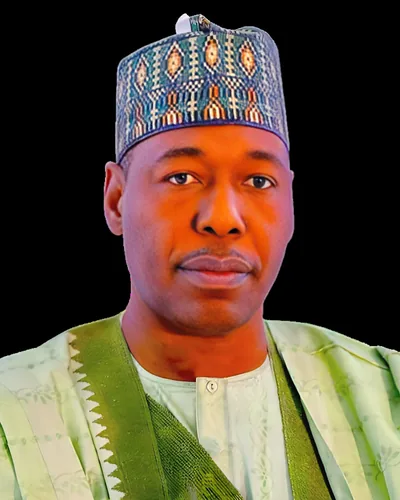
His Excellency Babagana Umara Zulum
APC In office since 29 May 2019 · 2nd term
View profileDeputy Governor
Umar Usman Kadafur
History
From around the eighth century the area of present-day Borno lay within the Kanem Empire, which stretched from southern Libya across Lake Chad. In the late fourteenth century the Sayfawa dynasty moved west of the lake, founding the Bornu Empire, which dominated the central Sudan for some 500 years from capitals such as Birni Ngazargamu. In the nineteenth century the El-Kanemi dynasty took control after the Fulani jihad, and in 1893 the empire was conquered by the Sudanese warlord Rabih az-Zubayr, who was killed by French forces at Kousséri in 1900.
The British incorporated Borno into the Northern Nigeria Protectorate in 1902 and established a new capital at Maiduguri in 1907. The eastern fringe, formerly German Kamerun, joined Nigeria after the 1961 plebiscite. After independence the area was part of the Northern Region and then the North-Eastern State, and Borno State was created on 3 February 1976; Yobe State was carved out of it in 1991.
From 2009 Borno became the epicentre of the Boko Haram insurgency, which escalated sharply between 2012 and 2015, displacing millions and drawing global attention with the 2014 Chibok schoolgirls abduction. Since 2015 military operations have pushed insurgents back to the Sambisa Forest and Lake Chad islands, and the state government has pursued large-scale reconstruction and resettlement, although attacks continue.
People & Culture
Ethnic groups
- Kanuri
- Shuwa Arabs
- Marghi
- Babur/Bura
- Fulani
- Kanembu
- Mandara
- Glavda
- Yedina (Buduma)
- Chibok
Languages
- Kanuri
- Hausa
- English
- Shuwa Arabic
- Marghi
- Bura (Babur)
- Fulfulde
- Glavda
- Kanembu
Traditional institutions
- Borno Emirate (Shehu of Borno)
- Dikwa Emirate
- Bama Emirate
- Biu Emirate
- Askira Emirate
- Uba Emirate
- Gwoza Emirate
- Shani Emirate
- Damboa Emirate
Economy & Natural Resources
Before the insurgency, Borno's rural economy relied on crops and livestock, while Maiduguri served as a major regional trading and service centre linking Nigeria with Chad, Niger and Cameroon. Key products include groundnut, millet, sorghum, maize, cowpea, gum arabic and livestock, along with fish from Lake Chad and its basin.
The state has deposits of kaolin, clay, diatomite, trona, natural salt, iron ore and other minerals. Recovery spending, humanitarian activity and cross-border trade are significant drivers; NBS data put Borno's internally generated revenue at about N19.5 billion in 2023.
Key sectors
- Agriculture
- Livestock
- Fisheries
- Cross-border trade
- Reconstruction and construction
- Solid minerals
Agricultural produce
- Groundnut
- Millet
- Sorghum
- Maize
- Cowpea
- Gum arabic
- Wheat
- Cattle
- Fish
Solid minerals
- Kaolin
- Clay
- Diatomite
- Trona
- Natural salt
- Iron ore
- Silica sand
- Mica
- Quartz
Raw materials
- Gum arabic
- Groundnut
- Hides and skins
- Fish
- Trona
- Diatomite
Internally generated revenue: ₦19.5bn (2023) · Source: NBS, Internally Generated Revenue at State Level 2023 (https://nigerianstat.gov.ng/download/1241579)
Investment Opportunities
Lake Chad basin agriculture and fisheries
Irrigated farming and fishing around Lake Chad and its tributaries offer scope as security improves.
Regional trade hub
Maiduguri's position near Chad, Niger and Cameroon makes it a natural logistics and wholesale centre.
Reconstruction and housing
Large-scale resettlement programmes create demand for building materials and construction services.
Gum arabic and livestock
Processing and export of gum arabic, hides and skins and meat.
Interested in Borno?
Submit your proposal and the Secretariat will connect you with the state's investment agency.
Tourism & Heritage
Shehu of Borno's Palace, Maiduguri
Seat of the Shehu of Borno, heir to the El-Kanemi dynasty of the historic Kanem-Bornu Empire.
Kyarimi Park (Maiduguri Zoo)
Zoological garden in Maiduguri.
Lake Chad
The Nigerian sector of Lake Chad in the far north-east of the state.
Gwoza Hills / Mandara Mountains
Rocky highlands along the Cameroon border.
Sambisa Forest / Chad Basin National Park
Part of the Chad Basin National Park; access restricted due to insecurity.
Gallery
Local Government Areas
27 local government areas
- Abadam
- Askira/Uba
- Bama
- Bayo
- Biu
- Chibok
- Damboa
- Dikwa
- Gubio
- Guzamala
- Gwoza
- Hawul
- Jere
- Kaga
- Kala/Balge
- Konduga
- Kukawa
- Kwaya Kusar
- Mafa
- Magumeri
- Maiduguri
- Marte
- Mobbar
- Monguno
- Ngala
- Nganzai
- Shani